
 Clinic Home
 Find another clinic
 Lifecare home

The Achilles tendon is the body’s largest and strongest tendon, connecting the calf muscles to the heel bone. The tendon acts like a spring, storing and releasing energy during movement to improve efficiency with activities like walking, hopping and running.
Achilles tendinopathy is a condition involving irritation and structural changes in this tendon, often due to changes in loading. It can affect both athletes and the general population.
There are two main types based on location:
- Insertional: at the tendon’s attachment to the heel.
- Mid-portion: about 2 cm above the attachment.
Contributing Factors:
- Load changes and overuse: Repetitive stress and sudden increases in activity (e.g. running or jumping) can strain the tendon. Training changes such as a sudden shift to harder or uneven surfaces can increase risk.
- Anatomical factors: Characteristics like flat feet, decreased ankle range or tighter calf muscles can change biomechanics during movement and increase the likelihood of injury.
- Improper footwear: Wearing shoes that do not provide adequate support or are worn out can contribute to tendon strain.
- Age: Risk increases with age due to changes in the tendon overtime.
- Systemic factors: Such as smoking, poor nutrition and obesity can impair tendon healing.
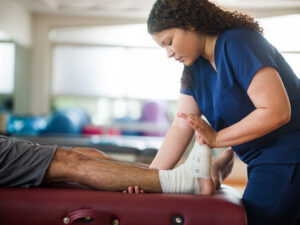
Symptoms (When to See a Physio):
- Pain and stiffness: Typically felt in the back of the heel or along the tendon, often worse in the morning or after rest.
- Activity-related pain: Discomfort during or after exercise (e.g. running), which may ease with warm-up but return later.
- Tenderness: Localised pain when the tendon is pressed.
- Swelling or thickening: The tendon may appear enlarged.
- Reduced performance: Decreased strength or endurance in activities like walking, running, or jumping.
Management (How Physio Helps):
- Load management: Modify activity levels to reduce excessive tendon stress.
- Graded loading program: Progressively strengthen the tendon through stages:
- Isometrics
- Isotonic (heavy slow resistance)
- Plyometrics / high-load “energy storage” exercises – assist with restoring the spring function of the tendon.
- Sport-specific rehabilitation (if needed)
- Biomechanical optimisation: Address contributing factors (e.g. orthotics, strapping).
- Adjunct therapies: Manual therapy techniques such as soft tissue work, joint mobilisation, or dry needling where appropriate.

In summary, Achilles tendinopathy is a common condition driven by changes in tendon loading and individual risk factors, presenting with pain, stiffness, and reduced function. Early recognition and appropriate management, particularly through tailored load modification and progressive strengthening, are key to recovery. Physiotherapy plays a vital role in addressing underlying contributors, restoring tendon capacity, and supporting a safe return to activity.
Hannah Faller – Physiotherapist


 Open Hours