
 Clinic Home
 Find another clinic
 Lifecare home
Your numbers add up to more effective treatment.
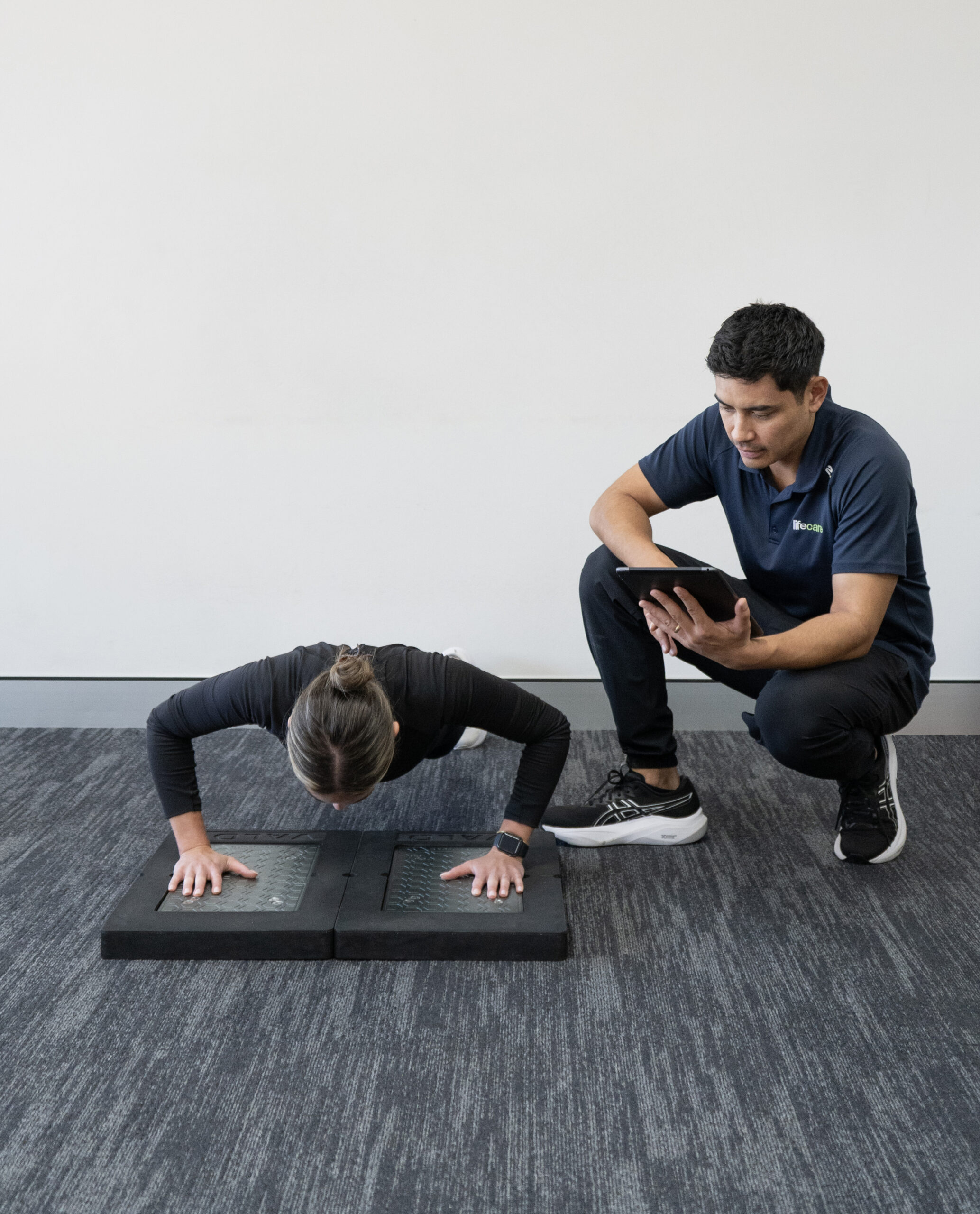
A VALD assessment uses the latest technology to quickly and more accurately measure your strength, power, balance, symmetry and movement to give you clearer information about your progress and recovery. This data allows your physiotherapist to understand better how your body is performing, where any weaknesses or imbalances may be, and to provide more effective and targeted treatment.A VALD assessment uses the latest technology to quickly and more accurately measure your strength, power, balance, symmetry and movement to give you clearer information about your progress and recovery.
This data allows your physiotherapist to understand better how your body is performing, where any weaknesses or imbalances may be, and to provide more effective and targeted treatment.
How a VALD assessment can help you
VALD gives you and your physiotherapist information that can’t be seen just by watching you move. It may help to:
- Identify weaknesses or imbalances you may not feel or notice
- Track your strength, power and balance over time
- Guide your exercises more precisely
- Give you confidence that you’re improving or ready to return to sport
A good example is a person may feel ready to return to sport after a knee injury, but testing may show their injured leg is still much weaker. VALD may help to reduce the risk of re-injury by showing more precisely what still needs work and confirming when strength has returned to safe levels.
Our VALD assessments use two main tools – ForceDecks and Dynamo.
ForceDecks
to measure strength, power, symmetry, balance and movement quality

DynaMo
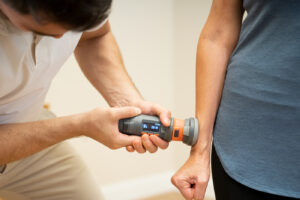
to measure strength and joint range of motion in the upper and lower body
Who is it for?
VALD assessments can be helpful for everyone, from professional sportspeople to someone recovering from injury, and recreational athletes just wanting to build strength and improve their movement.
-
Competitive and recreational athletes
VALD testing can help athletes assess strength, power, symmetry, balance and readiness to return to sport. This can help your physiotherapist make informed decisions about when it’s safe for you to return to sport. It can also track your progress after surgery, such as ACL rehabilitation.
-
People recovering from injury or surgery
VALD can show where strength is lacking and track your recovery, so you can return more safely at the right time. It provides more accurate data throughout your rehab and helps guide your progress, also monitoring recovery after surgery to ensure you’re meeting the right benchmarks.
-
People preparing for a sports season
Pre‑season screening establishes a baseline of your strength, movement and mobility. This can help you understand what’s normal for your body, so if you’re injured, you know what to work towards. It may also help with identifying weaknesses early, helping to reduce injury risk during the season.
-
Gym members and active individuals
Useful for checking if your training is balanced and if one side is stronger than the other. VALD testing provides more accurate baseline measures so you can track your progress over time. It also highlights areas needing improvement, which may help you train more effectively and reduce injury risk.
-
People involved in specific sports or activities
VALD assessments can be tailored to your sport or activity. They allow your physiotherapist to measure your current level of strength, power and movement, track your improvements and have a better chance of identifying potential issues earlier so you can continue to progress more safely.
-
People recovering from a work‑related injury
VALD can be used to measure and track your strength and movement during recovery from a work injury. This provides clearer information to guide your rehabilitation and show your progress over time, helping you and your healthcare team better understand when you’re ready to return to work tasks safely.
-
Older adults
Helpful for balance testing and fall prevention to detect small changes in stability that are not otherwise visible.
-
All individuals
Anyone wanting data on their strength and movement, with results compared to others of the same age and gender.
Why do our physiotherapists use VALD?
Our physiotherapists use VALD because it provides us more accurate data. This helps physiotherapists to make more informed decisions and give you a more personalised plan. The benefits to you include:
- Less guesswork in your treatment
- We see if both sides of your body are working evenly
- Your risks have a better chance of being detected earlier
- Tailored exercise programs that are more precise
- Your progress is more clearly measured
- You might feel more motivated
- Safer return-to-sport decisions based on your data, not just how you feel
What happens during the assessment?
A session usually takes around 40 minutes and we recommend that assessments be repeated every 4 to 8 weeks to track progress more accurately.
The assessment may include:
- Standing or balance tasks
- Jumping, hopping or landing assessments
- Squats or strength tests
- Grip strength or shoulder strength testing
- Range of motion checks
- A discussion of your results and next steps
Frequently asked questions
Is it only for elite athletes?
No. It can be valuable for people of all ages and activity levels, from older adults to weekend gym goers to elite athletes.Does it help prevent injuries?
Finding imbalances early may help reduce injury risk and supports better movement patterns.How does it help confidence?
Seeing real numbers improve over time may help you feel more confident in your recovery and return to activity or sport.Is the testing accurate?
ForceDecks and DynaMo measure small differences that can’t be seen by eye, giving you more accurate information about your body.Book a VALD assessment today
Assessments are available in selected Lifecare clinics across WA, NSW and VIC.


 Open Hours