
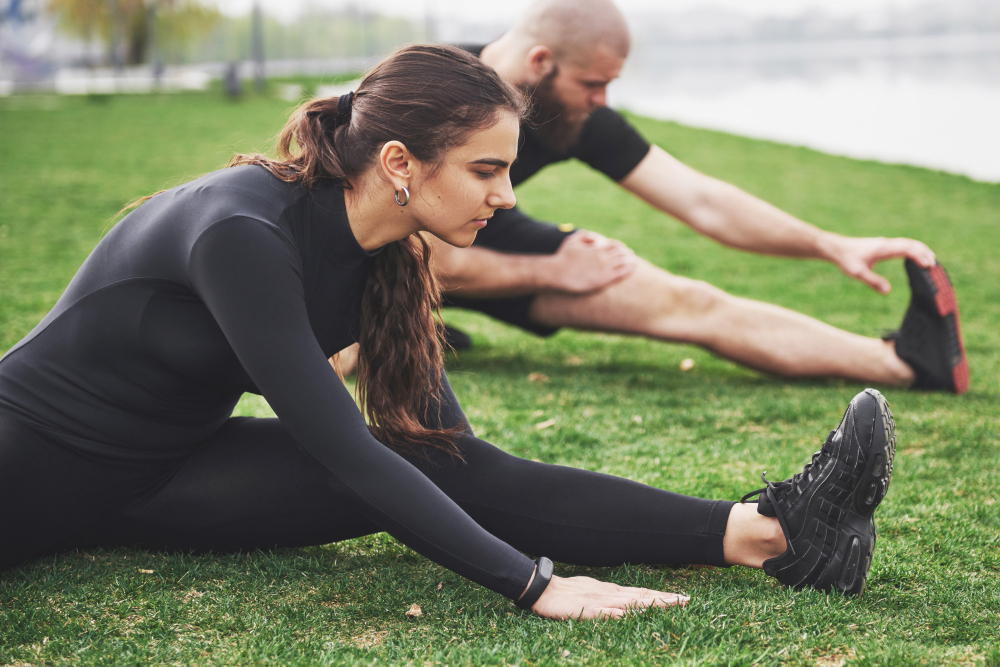
Finishing a workout often feels like the perfect moment to grab some water and get on with your day. But before you rush out of the gym or roll up your exercise mat, there’s one crucial step that shouldn’t be skipped: stretching.
Post-workout stretching is more than just a “nice extra”. It plays a key role in recovery, flexibility, and injury prevention. Research shows that stretching helps maintain healthy muscle function, supports joint mobility, and may reduce post-exercise soreness.
Here’s why stretching after exercise matters — and how to make it part of your routine.
What happens to your muscles during exercise?
When you exercise, your muscles contract repeatedly. This can lead to:
- Tightening of muscle fibres
- Shortening of muscle length
- Accumulation of metabolic byproducts
- Increased neural activity, keeping muscles in a heightened state of tension
Without stretching, these changes can leave your muscles feeling stiff and tight. Over time, this can affect posture, movement patterns, and injury risk.
At a glance: how stretching fits into different sports
| Sport | Role of Stretching | Why It Helps |
|---|---|---|
| Running | Maintains lower-limb mobility and stride efficiency | Reduces tightness in calves, hamstrings, and hip flexors, supporting smoother gait patterns |
| Strength training | Supports joint mobility and movement quality | Helps muscles return to resting length after lifting and reduces post-session stiffness |
| Team sports (AFL, soccer, basketball) | Enhances warm-up effectiveness and movement preparation | Dynamic stretching improves agility and readiness; static stretching is best saved for after training |
| Swimming | Maintains shoulder and thoracic mobility | Helps counter repetitive overhead movements and reduces tension through the upper body |
| Cycling | Offsets prolonged hip-flexed posture | Stretching hip flexors and quadriceps helps improve comfort and reduces stiffness from long rides |
| Racquet sports | Supports shoulder, forearm, and trunk mobility | Helps manage unilateral loading and reduces tightness from repeated strokes |
A major review in Sports Medicine highlights that stretching is most effective when combined with strength training, neuromuscular warm-ups, and proper load management.
Static vs dynamic stretching: what’s the difference?
Understanding the two main types of stretching helps you choose the right approach.
Static stretching
Static stretching involves holding a muscle at its end range for 20–30 seconds. It is most effective after exercise, when muscles are warm.
Benefits:
- Improves flexibility
- Reduces muscle tension
- Helps muscles return to resting length
- Supports relaxation and cooldown
Dynamic stretching
Dynamic stretching uses controlled, movement-based motions. It is best used before exercise as part of a warm-up.
Benefits:
- Increases blood flow and muscle temperature
- Enhances neuromuscular activation
- Prepares the body for sport-specific movement
1. Stretching helps reduce post-workout muscle soreness
Delayed onset muscle soreness (DOMS) is common after exercise. While stretching won’t eliminate soreness completely, it can help reduce discomfort and support recovery.
How stretching helps:
- Improved blood flow to support tissue repair
- Reduced neural excitability, easing tightness
- Gentle lengthening of muscle fibres after repeated contractions
What does the research say?
A 2021 systematic review in Frontiers in Physiology found that post-exercise static stretching produced small but meaningful reductions in DOMS in the first 24–72 hours after exercise. It didn’t significantly speed up strength recovery, but it did improve range of motion and helped people feel less tight.
2. Stretching improves flexibility and range of motion
Flexibility is essential for healthy movement. Without regular stretching, muscles can shorten and tighten, making everyday activities more difficult.
Why flexibility matters:
- Allows joints to move freely
- Reduces compensatory movement patterns
- Supports better posture
- Enhances performance in activities like running, swimming, and strength training
Static stretching is the most effective method for improving long-term flexibility.
3. Stretching helps prevent injuries
Stretching alone won’t prevent every injury, but it helps create the conditions for safer movement.
Stretching reduces injury risk by:
- Improving muscle balance
- Supporting smoother movement patterns
- Reducing excessive muscle tension
- Maintaining long-term mobility
4. Stretching supports better posture
Many people spend long hours sitting at desks, driving, or using digital devices. This can lead to tight hip flexors, hamstrings, chest muscles, and neck muscles. Stretching helps counteract these effects and supports better posture, breathing, and comfort.
5. Stretching helps you relax and cool down
Exercise activates the sympathetic nervous system — the “fight or flight” response. Stretching helps transition the body into a calmer state.
Benefits of a proper cooldown:
- Reduced heart rate and breathing rate
- Lowered stress hormones
- Improved mental clarity
- A sense of closure after a workout
Alternatives or complements to stretching
Stretching is valuable, but it’s not the only effective way to cool down.
Active cooldown
An active cooldown involves 5–10 minutes of low-intensity movement such as walking, light cycling, and gentle mobility drills.
Benefits:
- Helps clear metabolic byproducts
- Gradually reduces heart rate
- Supports circulation
- Reduces immediate post-exercise stiffness
Other recovery tools
- Foam rolling
- Massage
- Heat therapy
- Hydration and nutrition
- Adequate sleep

Types of stretches to include after a workout
After exercise, static stretching is most beneficial. Examples include:
- Hamstring stretch
- Quadriceps stretch
- Calf stretch
- Hip flexor stretch
- Chest stretch
- Upper trapezius and neck stretches
- Glute stretch
How long should you stretch for?
A good post-workout stretching routine can take as little as 5–10 minutes.
General guidelines:
- Hold each stretch for 20–30 seconds
- Repeat 2–3 times per muscle group
- Avoid bouncing or forcing the stretch
- Stretch to mild discomfort, not pain
Consistency is more important than intensity.
When should you avoid stretching?
Avoid stretching:
- Immediately after an acute muscle strain
- When a joint is swollen or inflamed
- If stretching causes sharp or radiating pain
If you’re unsure, a physiotherapist can guide you safely.
Stretching is a simple habit with big benefits
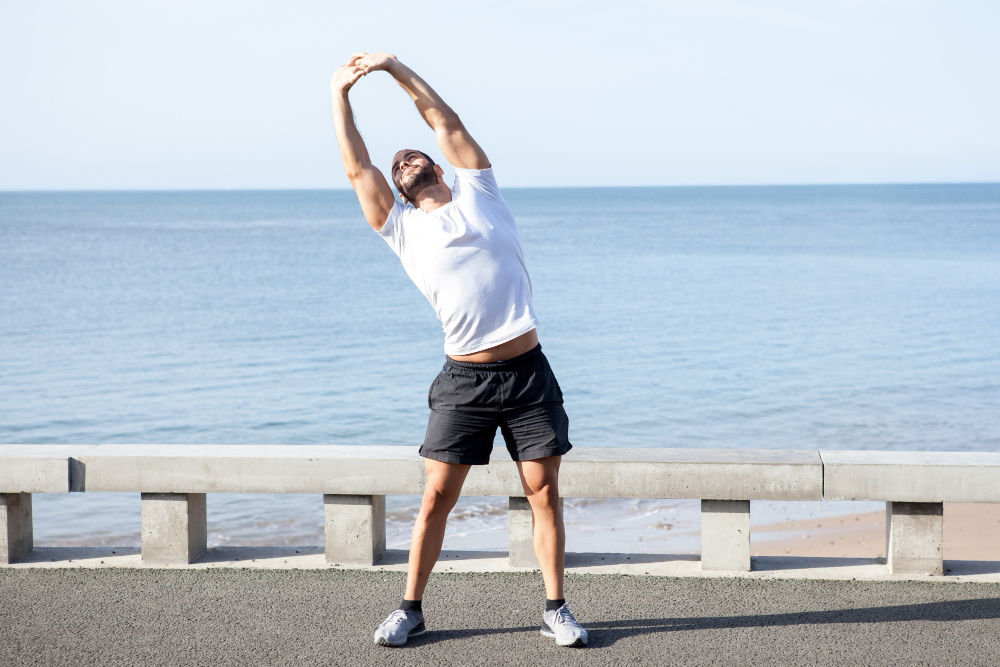
Stretching after a workout is one of the easiest ways to support recovery, maintain flexibility, and reduce injury risk. Whether you’re a runner, gym-goer, weekend sports player, or someone simply trying to stay active, adding a few minutes of stretching to the end of your workout can make a meaningful difference.
This article was written by Jasper Quick, a physiotherapist at Lifecare Frankston. He holds a Bachelor of Physiotherapy (Honours) and has extensive experience in assessing and managing musculoskeletal injuries, including developing tailored rehabilitation programmes to support long term recovery and improved movement.
References:
- Konrad A, Tilp M, Nakamura M, Behm DG. The effectiveness of post-exercise stretching in short-term and delayed recovery of strength, range of motion and delayed onset muscle soreness: A systematic review and meta-analysis of randomized controlled trials. Frontiers in Physiology. 2021;12:814869.
- Behm DG, Blazevich AJ, Kay AD, McHugh M. Acute effects of muscle stretching on physical performance, range of motion, and injury incidence in healthy active individuals: A systematic review. Sports Medicine. 2016;46(1):1–11.