
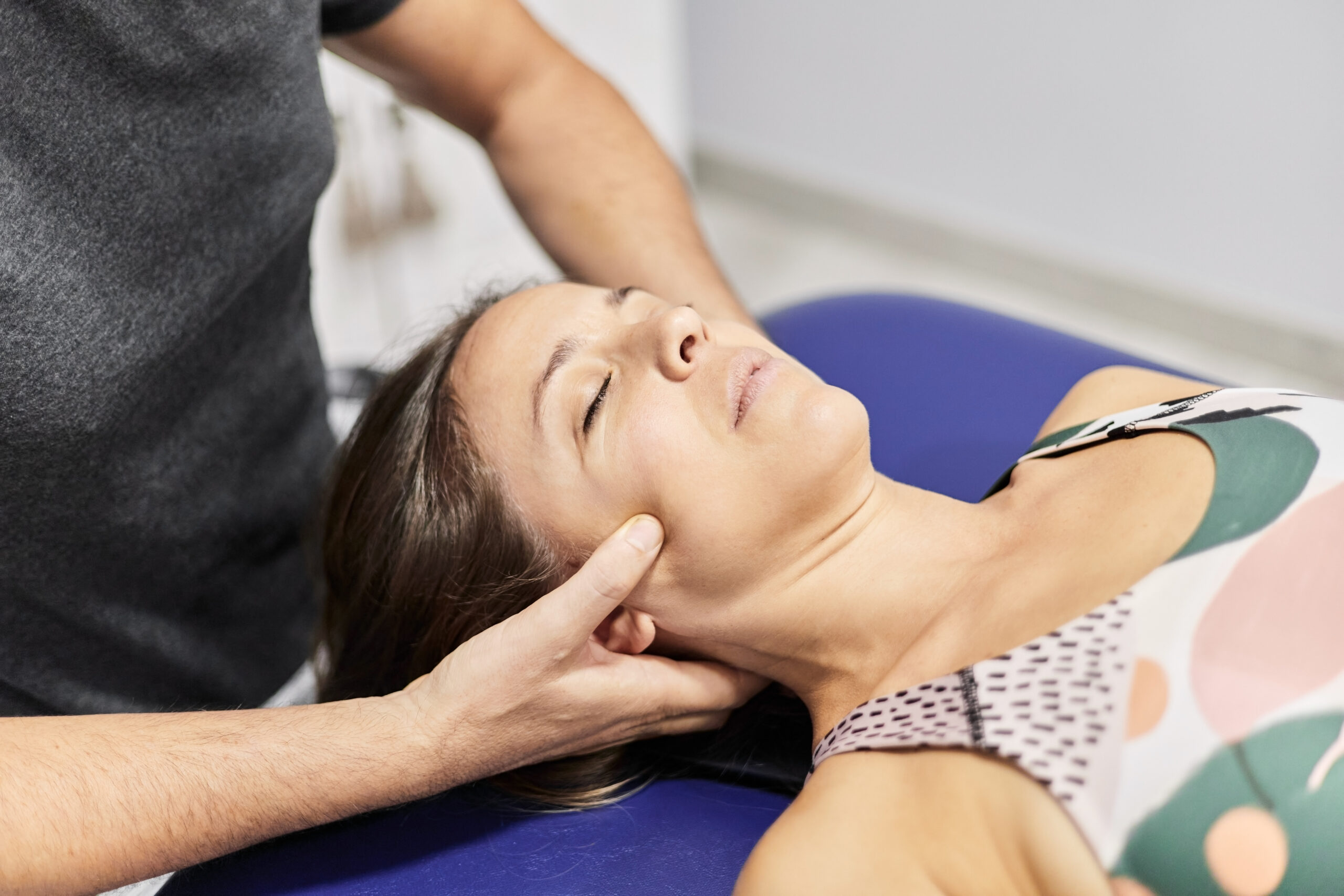
Jaw pain, clicking, clenching and headaches can involve the temporomandibular joint (TMJ) as well as the surrounding muscles of the face, neck and shoulders. These presentations are commonly grouped under Temporomandibular Disorders (TMD).
At Lifecare Physiotherapy, assessment focuses on identifying muscular and cervical (neck‑related) factors that may be contributing to TMJ and jaw symptoms. Management is tailored to the individual and aims to support symptom management, movement and function. Where appropriate, physiotherapy care may be provided in collaboration with dentists and other healthcare professionals.Common TMJ & jaw pain symptoms
You may consider a physiotherapy assessment if you experience:- Jaw pain, stiffness or aching
- Clicking, catching or locking of the jaw
- Facial, temple or ear‑region discomfort
- Teeth clenching or grinding (bruxism)
- Headaches associated with jaw tension
- Jaw fatigue while chewing
- Neck pain occurring alongside jaw symptoms
- Difficulty opening the mouth fully
Our assessment
Your assessment at Lifecare Physiotherapy is designed to understand the factors that may be contributing to your symptoms. This may include assessment of:- Jaw movement and range of motion
- Muscle tension and sensitivity in the jaw, face and neck
- Cervical spine movement and load tolerance
- Headache patterns and symptom behaviour
- Clenching or parafunctional habits
- Postural and movement‑related contributors
Treatment may include
Management is individualised and may include:- Jaw motor control and coordination exercises
- Strategies to reduce jaw and neck muscle overactivity
- Cervical spine load management
- Gradual strengthening and endurance exercises
- Self‑management strategies for clenching and grinding habits
- Education about symptom triggers, pacing and load tolerance
Collaborative care
TMD can involve multiple contributing factors. Where appropriate, Lifecare Physiotherapy may work alongside dental care and other health professionals to support coordinated management. With your consent, communication with your dentist may occur to assist continuity of care.When to seek assessment
Consider a physiotherapy assessment if:- Jaw pain has been present for several weeks or longer
- Headaches appear linked with jaw tension
- Jaw symptoms persist despite dental treatment
- Neck pain appears associated with jaw discomfort
FAQs
What is TMD?
Temporomandibular Disorders (TMD) is a broad term for conditions affecting the TMJ and the muscles and structures around the jaw. Symptoms can include jaw pain, clicking, stiffness, headaches and facial tension.Can neck problems contribute to jaw pain?
In some cases, yes. The jaw and neck share close muscular and neurological connections. Physiotherapy assessment may include both the jaw and cervical spine when clinically indicated.Do clicking jaws always need treatment?
Not always. Some people experience jaw clicking without pain or restriction. Assessment is generally recommended if clicking is associated with pain, locking, headaches, or difficulty opening the mouth.Can physiotherapy help with teeth grinding (bruxism)?
Dentists often manage bruxism with appliances such as night guards. Physiotherapy may assist by addressing associated muscle tension, jaw loading, and contributing neck factors that can accompany clenching or grinding.When should I see a physiotherapist for jaw pain?
You may consider assessment if you experience:- Persistent jaw pain
- Headaches associated with jaw tension
- Jaw fatigue, stiffness or restricted opening
- Ongoing symptoms despite dental care
- Neck pain associated with jaw discomfort