
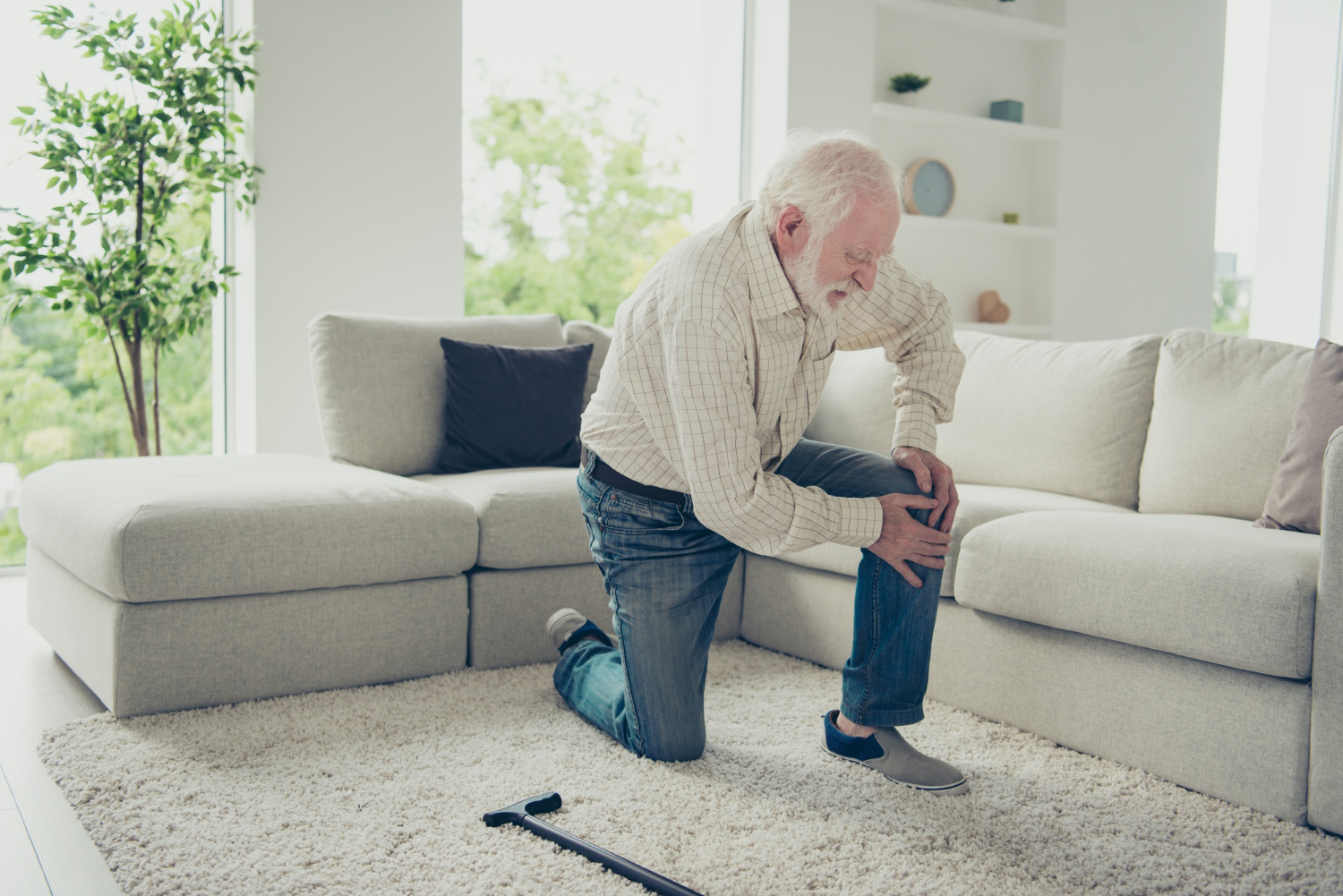
A fall can change everything. One moment you’re reaching for something on a high shelf or stepping off a kerb, and the next you’re on the ground, shaken, and perhaps injured. For many people, especially as they get older, a single fall can be the beginning of a loss of confidence that snowballs into reduced activity, deconditioning, and an even higher risk of falling again.
The good news is that falls are not an inevitable part of ageing. With the right assessment and a tailored prevention plan, most falls risk can be identified early and meaningfully reduced. Here’s how we approach it as physiotherapists.
When is a falls assessment necessary?
You don’t need to have already fallen to benefit from a falls assessment, but there are some clear signals that it’s time to book one in:
- You’ve had one or more falls, trips, or near-misses in the past 12 months
- You feel unsteady on your feet, particularly on uneven ground, stairs, or in low light
- You’ve noticed your walking has slowed down or changed
- You’re avoiding activities you used to enjoy because you’re worried about falling
- You have a condition such as Parkinson’s disease, stroke, peripheral neuropathy, or arthritis that affects movement or sensation
- You’re taking multiple medications, some of which can affect balance or blood pressure
- A family member or carer has raised concerns about your safety at home
If any of these sound familiar, a falls assessment is a proactive, practical step rather than an overreaction.
Objective assessment with VALD technology
One of the real advantages of a modern physiotherapy assessment is that we no longer have to rely purely on observation and subjective impressions of strength and balance. Our clinic uses VALD Performance equipment, a suite of tools originally developed for elite sport, to give us objective, precise data about how your body is actually performing.
ForceDecks, a dual force plate system, allows us to assess both your strength and your balance in one setup. By having you stand, sway, or perform simple movements such as sit-to-stands on the plates, we can measure your postural sway, how your weight is distributed between your left and right leg, and how quickly and effectively you can react to a loss of balance. Since lower limb strength and left-right asymmetry are two of the most consistent predictors of falls risk, this gives us a genuinely useful, evidence-based measure rather than a guess, capturing qualities that standard “eyeball” balance tests can miss.
The DynaMo, a handheld tethered dynamometer, gives us a portable and versatile way to measure strength in muscle groups that are harder to test on the force plates alone, such as the muscles around your ankles, neck, and trunk. Ankle and postural strength in particular play a key role in your ability to correct your balance and recover from a stumble before it becomes a fall. Because the DynaMo is quick and easy to use across a wide range of positions and joints, it lets us build a more complete strength profile to sit alongside your ForceDecks results.
The real value of this technology isn’t the numbers themselves, it’s what they let us do with your care. We can compare your results against normative data for your age group, track your progress objectively over time, and pinpoint specific weaknesses to target in your exercise program. It also means your progress is measurable and motivating: you can literally watch your balance scores and strength improve session by session.
Simple, practical prevention strategies
Alongside formal assessment, there’s a lot you can do day-to-day to reduce your falls risk:
- Clear your walkways. Remove loose rugs, trailing cords, and clutter from hallways and stairs.
- Improve your lighting. Use nightlights in hallways and bathrooms, and switch on lights before entering a dark room.
- Wear supportive, well-fitting footwear. Avoid loose slippers or walking in socks on hard floors.
- Get your vision checked regularly. Poor eyesight is a significant, often overlooked, falls risk factor.
- Review your medications with your GP or pharmacist, particularly if you’re on several medications or have recently started a new one.
- Use mobility aids correctly if you have one, and have your physiotherapist check it’s still the right fit and height for you.
- Stand up slowly, especially from lying or sitting, to avoid dizziness from blood pressure drops.
The power of exercise and exercise classes
If there is one intervention with the strongest evidence behind it for falls prevention, it’s exercise, specifically, exercise that challenges strength and balance together. Strength training helps maintain the muscle power needed to catch yourself if you stumble, while balance training improves your body’s ability to sense and correct instability before a stumble becomes a fall.
This is where structured, physiotherapist-led exercise classes come into their own. Group classes offer a level of challenge and progression that’s genuinely difficult to replicate with a home program alone, while also providing social connection, accountability, and encouragement, all of which help people stick with it. Being surrounded by others working on similar goals can make exercise feel less like a chore and more like something to look forward to.
Whether it’s one-on-one strength and balance training or a group falls-prevention class, the goal is the same: building a stronger, steadier, more confident you.
Take the first step
Falls prevention works best when it starts before a fall happens, not after. If you recognise any of the risk factors above, or simply want the peace of mind that comes from an objective, data-driven assessment, book in for a falls assessment with our team. Your future self will thank you for it.
Are you ready to book your falls assessments?
Tim Barnwell is an APA Sports Physiotherapist and Practice Principal at Lifecare Cockburn, with more than 20 years of clinical experience across Australia and the UK. His extensive expertise in musculoskeletal health, injury prevention, and rehabilitation helps people improve mobility, reduce their risk of falls, and maintain independence.